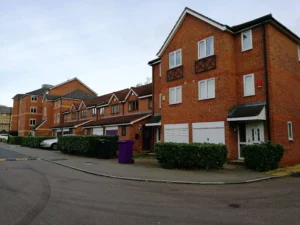

Sheffield continues to demonstrate strong underlying fundamentals across both the residential and industrial sectors. For investors assessing regional UK markets in early 2026, the city offers a combination of yield resilience, rental growth potential and long-term occupational depth.
Residential Market: Build-to-Rent & Private Rented Sector
Market Fundamentals
Sheffield’s residential investment case is supported by structural demand drivers:
- A combined student population exceeding 60,000 across the University of Sheffield and Sheffield Hallam University
- A growing professional workforce linked to advanced manufacturing, healthcare, digital industries and professional services
- Continued city centre regeneration, including the Heart of the City programme
- Relative affordability compared with Manchester, Leeds and Birmingham
Rental Performance
As of late 2025 / early 2026:
Average city centre apartment rents have shown steady year-on-year growth, typically in the 5–8% range, depending on unit type and specification.
One-bed apartments in prime central locations commonly achieve £750–£900 per month, with premium new-build units exceeding this threshold.
Gross yields for well-located apartments generally range between 6% and 7.5%, outperforming many larger core UK cities where yields have compressed below 5.5%.
This yield differential continues to attract regional and national investors seeking income resilience with moderate capital appreciation prospects.
Supply & Pipeline
While several build-to-rent schemes are progressing, overall supply of institutionally managed rental stock remains modest relative to demand. Sheffield is earlier in its BTR maturity cycle compared to Manchester or Birmingham, presenting an opportunity for forward-thinking investors.
Industrial & Trade Sector: Strong Occupational Depth
Alongside residential growth, Sheffield’s industrial market remains one of its most compelling investment stories.
Strategic Employment Drivers
The presence of the Advanced Manufacturing Innovation District, anchored by the Advanced Manufacturing Research Centre, supports high-value manufacturing and engineering demand. Global occupiers such as Boeing and McLaren Automotive reinforce the region’s international credibility.
Rental & Yield Profile
Prime industrial rents in Sheffield have shown consistent upward movement, with headline rents for modern units increasing significantly since 2021.
Smaller trade and multi-let industrial units — particularly those between 1,000–10,000 sq ft — remain undersupplied relative to SME demand.
Net initial yields for multi-let industrial estates in strong secondary regional markets such as Sheffield typically range between 6% and 7%, depending on covenant strength and asset quality.
Occupier demand is driven by:
- Last-mile logistics requirements
- Expansion of regional distribution networks
- Local manufacturing and engineering supply chains
- Trade counter and service operators
- Limited New Supply
Development viability, construction cost inflation and land constraints have limited speculative delivery in certain size brackets. As a result, high-quality, well-located industrial stock continues to experience strong occupancy levels and competitive letting environments.
Investment Outlook – 2026 and Beyond
Sheffield presents a balanced risk-return profile:
- Residential
- Strong rental demand
- Competitive entry pricing
- Attractive yield spread vs. core cities
- Regeneration-led capital uplift potential
- Industrial
- Structural occupier demand
- Limited supply in key size ranges
- Long lease profiles in advanced manufacturing
- Proven resilience across economic cycles
For investors prioritising income durability, regional growth and manageable entry costs, Sheffield offers a compelling alternative to overheated core markets. The city’s combination of regeneration activity, employment growth and industrial depth provides a stable platform for long-term capital deployment.